RECLAIM YOUR ATTENTION
Stop distractions.
Take your mind back.
What needs to change to get your F.O.C.U.S. back?
Your next step starts with understanding where you are.
Discover what's distracting you, regain control of your attention and build a better way to work and live.
5 questions 60 seconds Personalised result
Private • No judgement • Practical next step
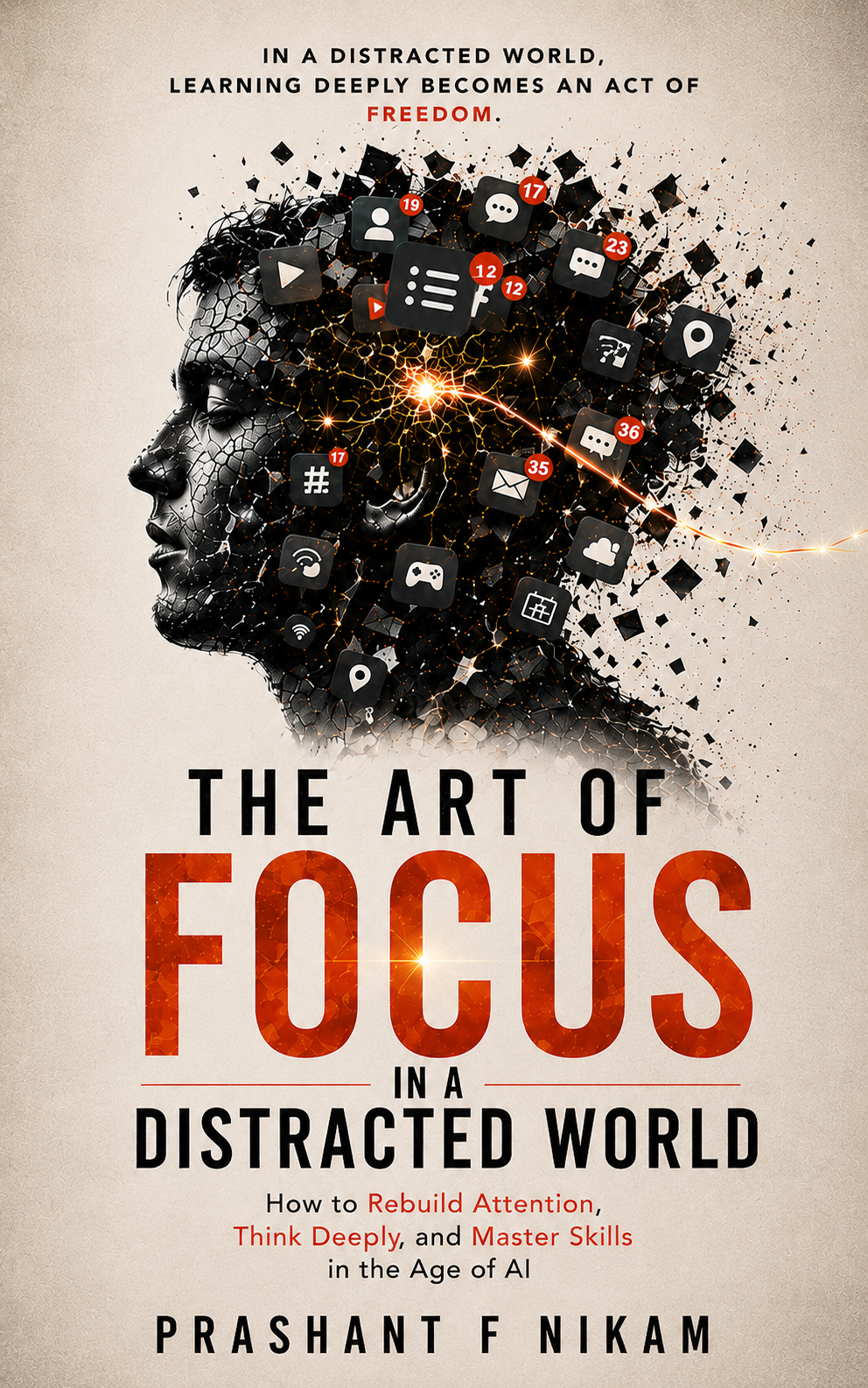
“The Art of FOCUS in a Distracted World”
WAYS TO WORK TOGETHER
Choose the programme that puts your attention back under your control.
Start with the level of support that fits your challenge.
F.O.C.U.S. BREAKTHROUGH™
7 days
Fix one recurring focus leak and regain momentum.
EXPLORE BREAKTHROUGHF.O.C.U.S. RESET™
21 days
Regain control when competing demands keep scattering your attention.
EXPLORE RESETF.O.C.U.S. PERFORMANCE MASTERY™
6 weeks
Build a complete system for sustained focus, deep work and performance.
EXPLORE MASTERYTHE SYSTEM BEHIND THE SCORE
The book behind the F.O.C.U.S. System.
The Art of FOCUS in a Distracted World
How to Rebuild Attention, Think Deeply, and Master Skills in the Age of AI
The book is the practical foundation behind the F.O.C.U.S. System — a five-part framework for protecting attention, choosing what matters, creating deeper work, turning learning into action, and sustaining progress in a distracted world.
- FFortify Your Mind
- OOwn Your Direction
- CCreate Deep Work
- UUpgrade Your Learning
- SSustain Mastery
FOR READERS
Already have the book?
Put the F.O.C.U.S. System into practice.
Access the companion workbook to work through the F.O.C.U.S. exercises and turn the ideas from the book into a practical personal system.
For readers of “The Art of FOCUS in a Distracted World.”
60 SECONDS. FIVE QUESTIONS.
Where is your FOCUS being pulled away?
Find the part of your F.O.C.U.S. System that could make the biggest difference first.
DISCOVER MY F.O.C.U.S. SCORE